


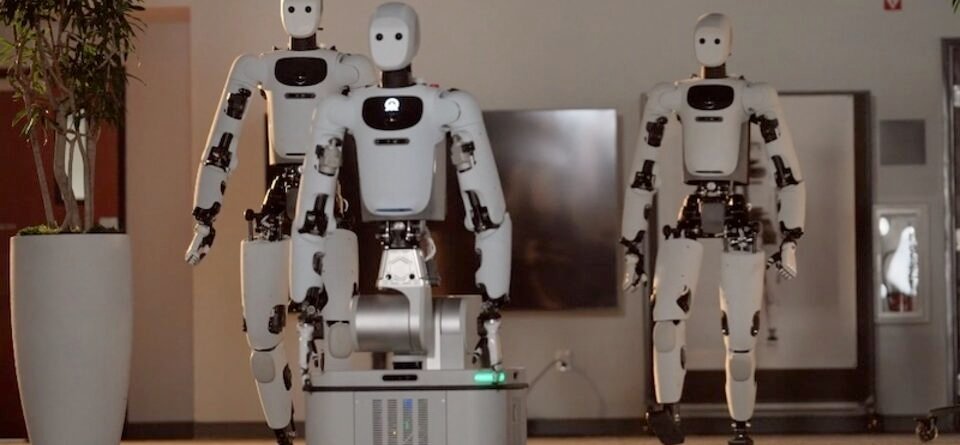
Apptronik Opens “Robot Park” to Supercharge Apollo Humanoids with Google DeepMind AI
AUSTIN, Texas — Apptronik, a frontrunner in AI-driven robotics, has officially opened the doors to its expanded “Robot Park”—a sprawling, 90,000-square-foot training ground designed to teach its Apollo humanoid robots the nuances of the real world.
While the Austin facility serves as the flagship, it is just the first node in a rapidly expanding global network. Apptronik confirmed that similar Robot Parks are already operational at customer and partner sites, with additional metropolitan locations slated to open in the coming months.
Central to this rollout is the unveiling of Apollo 2, the latest iteration of the company’s humanoid platform. Available in both bipedal and wheeled-base models, Apollo 2 is engineered specifically for large-scale data collection, allowing the robots to master a wide spectrum of workplace tasks.
This data is the lifeblood of Apptronik’s partnership with Google DeepMind. By feeding high-quality, real-world operational data into DeepMind’s foundational Gemini Robotics models, the two companies are closing the loop between physical labor and digital intelligence. Together, the Robot Park infrastructure, the Apollo 2 hardware, and the DeepMind collaboration form an integrated flywheel for rapid AI development.
From Demos to Daily Duty
“The industry has spent years showing what robots can do in demos. We’re focused on what they can do every day on the job,” said Jeff Cardenas, CEO and co-founder of Apptronik. “Robot Park provides the fuel for that—real data from real environments—and Apollo 2 is the machine that makes it possible. That’s how you move from early prototypes to deployable humanoids.”
The Data Engine
Humanoid robots require massive, diverse datasets to operate autonomously. At the Austin facility, Apollo 2 units—in both walking and wheeled formats—are being put through their paces across logistics, manufacturing, and retail use cases. To capture even greater diversity, similar data workflows have been deployed at partner sites, including Mercedes-Benz and logistics giant GXO.
Through a combination of human teleoperation and autonomous execution, the robots are generating torrents of training data. This information is actively used to refine the Gemini Robotics models, ensuring that when Apptronik’s commercial fleet is ready for prime time, it will possess “out-of-the-box” embodied intelligence.
Beyond physical data, Apptronik is leveraging high-fidelity physics simulations to accelerate hardware design and algorithmic development, ensuring the platform remains agile as AI science advances.
Modular by Design: The Apollo 2 Strategy
Apollo 2 has already been the workhorse of the Robot Park for over a year. However, its modularity is key to its commercial appeal.
- The wheeled-base configuration integrates seamlessly with existing industrial safety standards for mobile robots, making it easier for customers to adopt immediately.
- The bipedal configuration offers maximum adaptability for complex, human-centric environments, allowing Apptronik to rigorously test safety and reliability in unpredictable scenarios.
“For truly useful humanoid robots, safety and reliability have to advance alongside capability,” noted Barry Phillips, Chief Commercial Officer. “By offering a modular platform, we can deploy the same core technology in a way that fits current safety standards today, while building the walking robots of tomorrow.”
The Road to Apollo 3
Crucially, every byte of data captured by Apollo 2 and processed through the DeepMind partnership is directly informing the development of Apollo 3—Apptronik’s next-generation commercial product. By the time Apollo 3 debuts, it will leverage this vast reservoir of experience to hit the ground running with unprecedented levels of autonomy and reliability.

LEAVE A COMMENT