


Boston Dynamics Just Hired the Man Behind Alexa — Here’s Why That Changes Everything
For thirty years, Boston Dynamics has been the best robotics company in the world at making machines move. The backflips, the parkour, the dancing Spot — nobody does locomotion like them.
But here’s the uncomfortable truth the industry whispers: Boston Dynamics robots are brilliant athletes with the brains of a calculator. They can do a backflip but can’t figure out which box to pick up without being told exactly how.
On October 7, 2026, the company made its most important hire ever to fix that. They named Rohit Prasad — the man who built Alexa and led Amazon’s AGI division — as CEO.
This isn’t a routine executive shuffle. This is Boston Dynamics declaring what the next decade is about.
Who Is Rohit Prasad?
If you’ve ever talked to an Alexa, you’ve used his work. Prasad spent 12 years at Amazon, joining in 2013 as director of machine learning for Alexa and rising to Senior Vice President and Head Scientist for Alexa and Artificial General Intelligence. He took Alexa from a lab experiment to a service in hundreds of millions of households — one of the largest AI deployments in human history.
More recently, he led development of Amazon Nova, the company’s family of foundation models for enterprise and generative AI applications. Before Amazon, he spent nearly 14 years at Raytheon BBN Technologies, leading machine-learning research for U.S. government and commercial customers.
He’s also been based in the Boston area for over 25 years, with deep ties to the region’s robotics and AI community — the exact network Boston Dynamics needs to hire from.
He succeeds Robert Playter, who stepped down in February after six years as CEO.
What “Physical AI” Actually Means
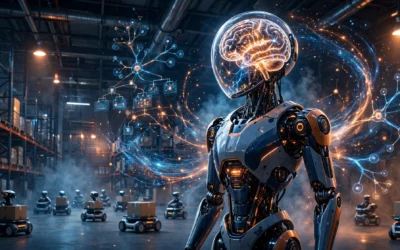
Boston Dynamics says Prasad’s appointment “accelerates the company’s Physical AI strategy” — combining world-class robotics with advanced AI to commercialize intelligent machines at scale.
Strip away the corporate language and the idea is simple: take the world’s best robot bodies and give them the world’s best robot brains.
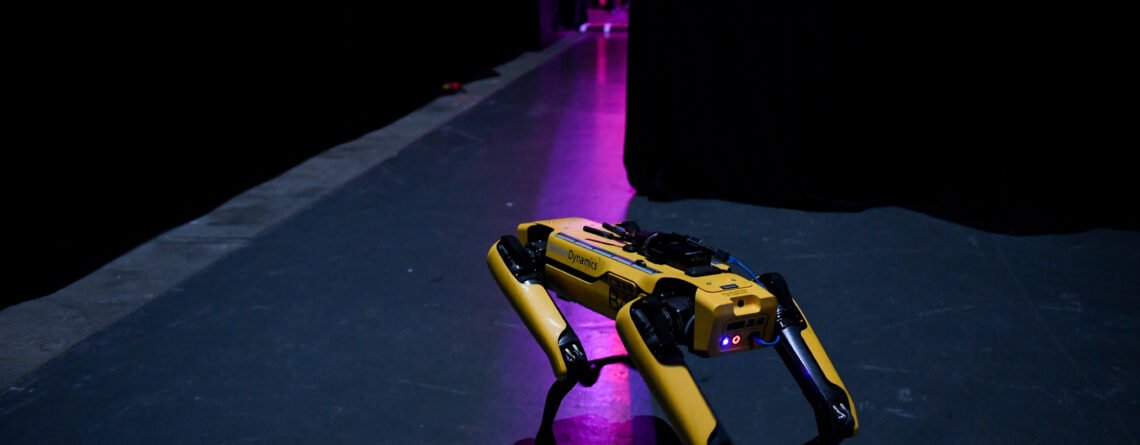
Today’s Spot can navigate a factory autonomously — but it follows pre-programmed routes. Today’s Atlas can do parkour — but every move is choreographed. Physical AI means robots that perceive, reason, and adapt: a Spot that notices an unusual vibration and investigates on its own, a Stretch that figures out how to handle a damaged box it’s never seen before, an Atlas that learns a new assembly task by watching a human do it once.
Prasad put it this way: “By bringing together advanced AI and robotics, we can build intelligent systems that create meaningful value in real-world environments, expand the reach of robotics across industries, and shape the next era of Physical AI”.
Why This Hire Is a Big Deal
- He ships. Most AI researchers publish papers. Prasad shipped Alexa to hundreds of millions of households and Nova to enterprise customers. Boston Dynamics doesn’t need more demos — it needs products at scale. He’s done that twice.
- He speaks both languages. Fourteen years of government ML research at BBN, twelve years of consumer AI at Amazon, now robotics. He understands foundation models and what it takes to deploy them where failure has physical consequences.
- The timing is perfect. Boston Dynamics is transitioning from “eye-catching demonstrations” to “broad commercial deployment”. The hardware is ready. What’s missing is the intelligence layer — exactly Prasad’s expertise.
- Hyundai is all-in. Boston Dynamics’ owner is building a U.S. robot production facility targeting 30,000 units per year by 2028, with Atlas expected to start working at Hyundai’s Metaplant America in Georgia that same year. That’s not a research project — that’s a manufacturing plan. And manufacturing at that scale needs robots smart enough to handle variation, which needs exactly what Prasad builds.
How This Boosts Boston Dynamics in the Coming Years
Here’s my honest read on what changes:
2027: The intelligence layer arrives. Expect Spot and Stretch to gain dramatically better autonomy — natural-language tasking (“inspect the north pipeline”), anomaly detection, adaptive behavior. The hardware doesn’t change; the software transforms what it can do.
2028: Atlas goes to work. Hyundai’s timeline has Atlas entering real factory work in Georgia. A humanoid on a production line lives or dies on its ability to handle the unexpected — dropped parts, changed layouts, new tasks. That’s a Prasad-shaped problem.
2028–2030: The platform play. With 30,000 units/year of manufacturing capacity, Boston Dynamics isn’t selling robots anymore — it’s selling capability. The company that owns both the best bodies and the smartest brains becomes the platform everyone else builds on. Think Android, but for physical labor.
The competitive moat. Unitree wins on price. Tesla wins on hype. But nobody combines three decades of locomotion expertise with a CEO who scaled Alexa and built foundation models. If Physical AI works, that combination is very hard to replicate.
The Honest Caveats
- AI talent ≠ robotics success. Prasad has never run a robotics company. The gap between “AI that talks” and “AI that doesn’t drop a 14 kg payload on someone’s foot” is real.
- Hyundai’s timeline is aggressive. 30,000 units/year by 2028 with Atlas in factories is an enormous bet. Manufacturing robots at that scale has humbled better-funded efforts.
- Competition isn’t standing still. Figure, Tesla Optimus, and the Chinese humanoid wave (Unitree, Agibot, UBTech) are all racing toward the same Physical AI future — many at a fraction of the cost.
- Commercialization is the hard part. Boston Dynamics has a long history of brilliant engineering and thin profits. Prasad’s mandate is explicitly commercial — but that’s easier announced than done.
The Bottom Line
For thirty years, Boston Dynamics answered the question “can robots move like animals?” with an emphatic yes.
Rohit Prasad was hired to answer the next question: “can robots think like workers?”
The man who taught millions of homes to talk to a speaker is now teaching the world’s most athletic robots to understand the world. If he pulls it off, we won’t remember October 2026 as a CEO announcement — we’ll remember it as the day the robot industry grew a brain.
Disclosure: Robot Zone participates in affiliate programs. If you purchase through links on this site, we may earn a commission at no extra cost to you.
Sources
- Boston Dynamics Names Former Amazon AI Leader Rohit Prasad as CEO — MarTechAI
- Boston Dynamics Names Rohit Prasad CEO — IndUS Business Journal
- Boston Dynamics Taps Former Amazon AI Executive Prasad as CEO — AI Insider
- Rohit Prasad Takes Over as CEO at Boston Dynamics — MIT Sloan India
- Boston Dynamics Names Amazon AI Veteran Rohit Prasad as CEO — Seoul Economic Daily
- Boston Dynamics Appoints Rohit Prasad as CEO — Engineering.com





LEAVE A COMMENT