


YYForce Opens a Robot Training Center in Singapore — and It’s Smarter Than It Sounds
Here’s a sentence I never expected to type: a workforce solutions company just opened a school for humanoid robots.
And honestly? It might be one of the shrewdest moves in the service robotics space this year.
Wait — Who Is YYForce?
Fair question. YYForce isn’t a robot manufacturer. It’s a technology-enabled workforce solutions and integrated facility management company — the kind of business that staffs hotels, cleans office buildings, and manages security for commercial properties.
That’s exactly why this is interesting. They didn’t open a robotics lab to show off. They opened one because they have a problem their customers will pay to solve: not enough people to do service work, and rising expectations for the work that gets done.
What the Center Actually Does
The facility has three jobs:
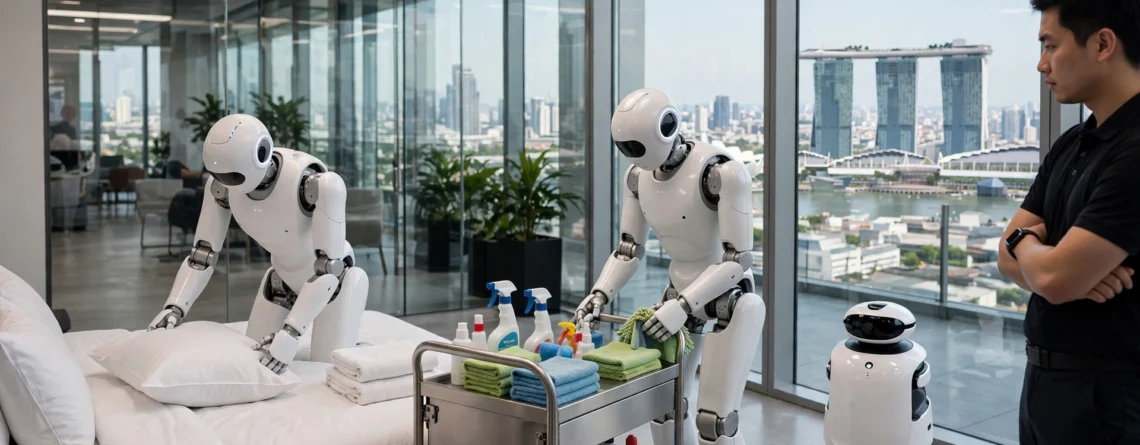
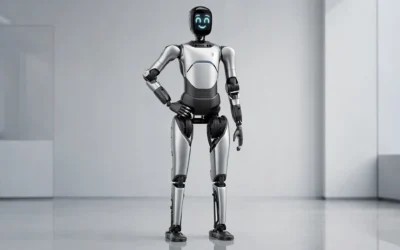
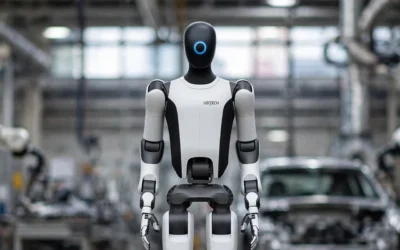
1. Train humanoids for real service tasks. The center includes simulated service environments — mock hotel rooms, restrooms, banquet halls — where humanoid robots practice housekeeping, restroom cleaning, banqueting support, and hospitality workflows. Not in a lab. In replicas of the places they’d actually work.
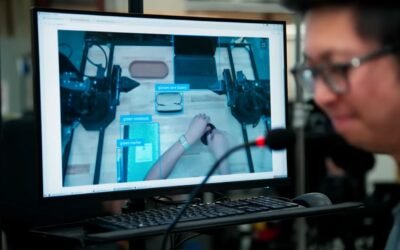
2. Collect the data nobody else has. Through repeated training, YYForce gathers operational data on navigation, movement, object interaction, task execution, and environmental conditions. This is the unsexy goldmine: thousands of hours of “robot tries to clean a hotel bathroom, here’s what went wrong” data. In the Physical AI era, that dataset is worth more than the robots.
3. Prove it to customers. A live Security Command Center demonstrates robotic patrol integrated with surveillance, sensors, cameras, and centralized monitoring — showing customers exactly how robots complement (not replace) their security personnel. The showroom floor covers indoor and outdoor cleaning robots, food delivery bots, autonomous security robots, even swimming pool cleaners.
The Business Model: Robots as a Service
Here’s where it gets clever. YYForce isn’t asking hotels to buy a $50,000 humanoid. They’re evaluating Robotics-as-a-Service (RaaS), robot leasing, and managed services — recurring revenue arrangements where customers access robotics without buying hardware outright.
The commercialization pathway is deliberately staged: training and data collection → workflow testing → customer demonstrations → proofs of concept → commercial deployment, where viable. No hype-driven leaps. Each step has to clear performance and cost bars.
CEO Mike Fu put it plainly: “Our objective is to help customers put robotics to work in everyday service operations” — and the center exists to “rigorously test each application against performance and cost requirements.”
Why Singapore?
Singapore is arguably the best place on Earth to do this. Service operators there face acute manpower constraints, and the government is actively pushing automation. In May 2026, Singapore’s IMDA, JTC Corporation, and the Singapore Institute of Technology announced a physical AI testbed at Punggol Digital District for delivery, cleaning, and security patrolling applications.
YYForce is surfing a real policy wave, not fighting against the current.
The Market They’re Chasing
The numbers explain the ambition: Grand View Research puts the global service robotics market at $68.1 billion in 2026, growing to $107.8 billion by 2030. The humanoid slice alone is estimated at $5.41 billion in 2026, projected to reach $50.27 billion by 2035.
But here’s what I respect about YYForce’s announcement: they explicitly note these are industry forecasts, not estimates of their addressable revenue — and they admit the center’s opening “does not represent an announcement of material robotics orders or contracted recurring revenue”. In an industry drowning in hype, that honesty is refreshing.
They’re equally candid about the technology: training activities “do not establish that humanoid robots can yet perform complete housekeeping or restroom-cleaning duties autonomously”. The robots are in school. Graduation is not guaranteed.
The 2030 Vision: People + AI + Robots
The division of labor they envision is sensible: humans handle judgment, communication, and flexibility; robots handle the repetitive, physically demanding, monitoring-intensive tasks. As Mike Fu says: “Our 2030 vision brings people, AI, and robotics together to elevate how services are delivered.”
Why This Matters
Most robotics news is about the machines. This story is about the deployment gap — the chasm between “impressive demo” and “actually cleaning a hotel at 2 AM without breaking anything.”
That gap is where robotics companies go to die. Hardware is getting cheaper and more capable every year, but someone has to do the grinding work of training, testing, integrating, maintaining, and proving ROI task by task, building by building.
YYForce — a company that already manages the buildings — is positioning itself as the one that closes that gap. They know what “clean” means to a hotel manager. They know the workflows. They have the customer relationships. The robots are just the new tool.
It’s not glamorous. It’s not a backflipping humanoid. But “whoever figures out deployment at scale” might be the most valuable question in robotics right now — and a training center in Singapore is a pretty good place to start answering it.
Disclosure: Robot Zone participates in affiliate programs. If you purchase through links on this site, we may earn a commission at no extra cost to you.




LEAVE A COMMENT