


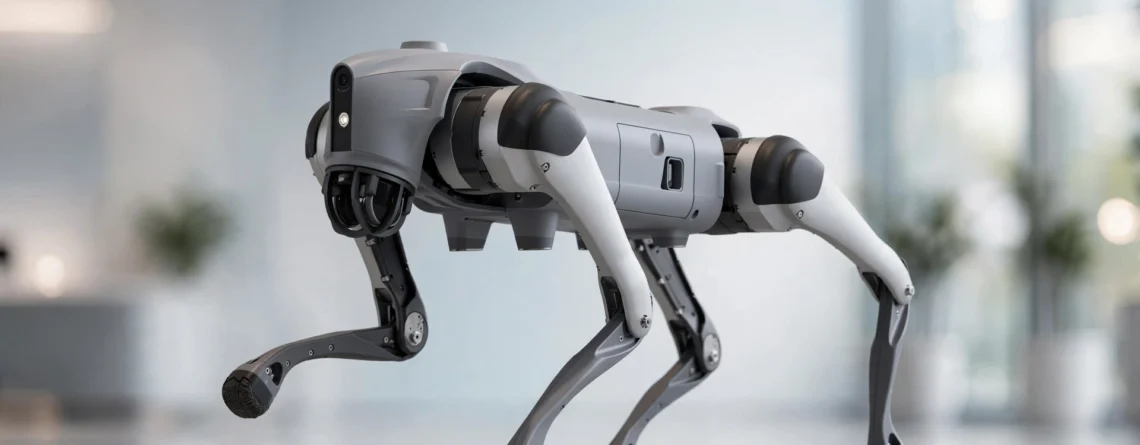
The $1,600 Robot Dog That Outsold Every Other Quadruped on Earth
Let me tell you about the moment I realized the robot dog revolution had already happened — quietly, without asking permission.
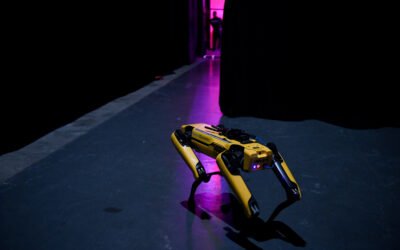
Boston Dynamics’ Spot is the one you’ve seen in the viral videos. It costs about $75,000. Impressive machine. Meanwhile, a company in Hangzhou looked at that price tag, laughed politely, and built something 97% cheaper that now owns nearly 70% of the global quadruped market.
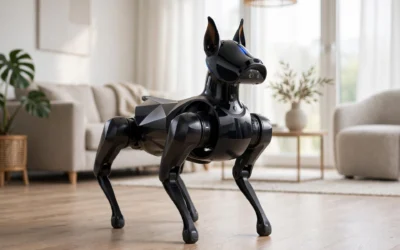
Meet the Unitree Go2: the world’s best-selling robot dog, starting at around $1,600 — less than a MacBook Pro.
What $1,600 Actually Buys You
When IEEE Spectrum covered the Go2’s launch, the tone was barely-contained disbelief: faster, more agile than its predecessor, now with a LiDAR — and somehow cheaper. Here’s the full picture:
| Specification | Go2 Air | Go2 Pro | Go2 Edu |
|---|---|---|---|
| Price | ~$1,600 | ~$2,800 | ~$11,190+ |
| Weight | ~15 kg | ~15 kg | ~15 kg |
| Degrees of freedom | 12 | 12 | 12 |
| Top speed | 2.5 m/s | 3.5 m/s | 5 m/s (burst) |
| Payload | ~7 kg | ~8 kg | ~8 kg (12 kg max) |
| Battery | 8,000 mAh, 1–2 h | 8,000 mAh, 1–2 h | 15,000 mAh, 2–4 h |
| Compute | Basic | 8-core CPU | Jetson Orin (40–100 TOPS) |
| Voice control | — | Offline assistant | Full + SDK |
| Foot force sensors | — | — | Yes |
| LiDAR | 4D LiDAR (360°×90°+) | 4D LiDAR | 4D LiDAR |
Every tier ships with Unitree’s 4D LiDAR and an HD wide-angle camera — hemispherical obstacle sensing that nothing else near this price has.
What It Can Actually Do
Run like the wind. The Pro hits 3.5 m/s; the Edu bursts to 5 m/s. That’s not a jog — that’s a sprint that would embarrass most humans over short distances.
Do backflips. Front flips. Handstands. The Go2 does front flips and walks on its front legs, while Xiaomi’s rival CyberDog 2 answers with backflips. This isn’t showing off (okay, it’s a little showing off) — it’s proof of the dynamic balance algorithms that make everything else possible.
Follow you like a real dog. The Pro’s side-follow mode lets it trot alongside you on a jog. Combined with voice control and GPT-powered interaction, the line between “machine” and “pet” gets genuinely blurry.
See in 4D. That chin-mounted LiDAR sees 360° around and 90°+ vertically, down to 5 centimeters — intelligent terrain navigation and obstacle avoidance that works in the dark, in dust, in chaos.
Carry your stuff. 7–8 kg of payload (12 kg max) means it can haul sensor packages, delivery boxes, or inspection equipment across terrain wheels can’t handle.
Where It’s Actually Useful (Not Just Cool)
This is the part that converted me from skeptic to believer. The Go2 isn’t a toy that happens to be useful — it’s a tool that happens to be fun:
Industrial inspection. Refineries, mines, power substations. Quadrupeds climb stairs, navigate rubble, and carry thermal cameras where wheeled robots get stuck.
Security patrol. Fence lines, perimeters, industrial estates — 24/7 cadence, zero crew risk.
Research. IIT, NIT, IISc and countless labs run Go2 Edu units for ROS2 development, computer vision, multi-agent systems, and locomotion research. At $1,600–$2,800, a grad student can afford what used to require a defense grant.
Education. The Air is perfect for STEM programs — there’s even a graphical programming interface for kids who’ve never written a line of code.
Entertainment. Film sets, luxury hotel lobbies, science museums. The Go2 turns “AI” from an abstract concept into something guests can pet.
Your life. Side-follow jogging companion, conversation partner, the most expensive fetch player in history. No judgment.
Go2 vs. The World
The honest comparison everyone asks about: Go2 vs. Xiaomi CyberDog 2 (~$1,785). Same species, different philosophies — the Go2 is a performance machine for engineering and autonomy work; the CyberDog is an ecosystem product riding Xiaomi’s smart-home platform. Pick the Go2 for capability; pick the CyberDog if your house already runs on Xiaomi.
And Go2 vs. Spot? Spot is the better industrial machine with the better support network. It also costs 40–50× more. For everyone who isn’t an oil major, that’s the whole conversation.
The Honest Caveats
- Battery life is the eternal complaint. 1–2 hours on the standard pack. The long-life battery helps, but this isn’t an all-day worker.
- It’s loud. Twelve motors moving fast sounds like twelve motors moving fast. Your neighbors will know.
- No formal IP rating. Dust and splash resistance is “basic” — this isn’t a rain-or-shine outdoor worker.
- The Air is limited. No SDK, no foot sensors, no voice. It’s the fun tier; serious work starts at Pro or Edu.
Which One Should You Get?
- Curious / kids / STEM: Go2 Air ($1,600). The gateway drug.
- Developers / creators: Go2 Pro ($2,800). The sweet spot — speed, compute, 4G, voice.
- Labs / industry: Go2 Edu ($11,190+). Force sensors, Jetson Orin, full SDK.
- Wheels + legs: Go2-W. Pneumatic tires meet quadruped legs for the best of both worlds.
The Bottom Line
Here’s what I keep coming back to: the Go2 didn’t win by being the best robot dog in a lab. It won by being good enough at a price nobody could ignore — and then getting better every year while the price stayed put.
Boston Dynamics proved quadrupeds were possible. Unitree proved they could be popular. There’s a difference, and it’s worth about 68 percentage points of market share.
The robot dog revolution didn’t arrive with a keynote and a $75,000 price tag. It arrived in a cardboard box, for the price of a laptop, doing backflips in someone’s backyard.
Disclosure: Robot Zone participates in affiliate programs. If you purchase through links on this site, we may earn a commission at no extra cost to you.




LEAVE A COMMENT